



KyphoLift
Get the most from MRI


KyphoLift is a durable MRI patient-positioning device developed by MRI technologists. It enables a single technologist to raise a patient to a precise non-flat angle and maintain that support throughout the exam. It is especially useful for patients with kyphosis, obesity, spinal fusion, degenerative disc disease, pain, or limited mobility.
Positioning these patients involves two separate challenges: lifting the patient into a tolerable position and keeping that position stable for the full 30-90 minute exam. KyphoLift addresses both without relying on stacks of pillows or repeated manual lifting.
Why Positioning Matters- Improvised pillow supports can compress or shift, allowing the patient's position and anatomy to change during the scan.
- Manual setup may require two technologists in MRI Zone IV and adds to fatigue when staffing is already limited.
- Pain, discomfort, and positional instability can lead to motion artifacts, repositioning, incomplete exams, callbacks, and repeat sequences.
- Long or inconsistent setups can delay the schedule, displace add-on exams, and reduce usable scanner capacity.
- Enables safe, single-technologist positioning at precise, repeatable angles.
- Maintains stable support throughout long examinations, improving comfort and reducing the need for repositioning.
- Reduces variability associated with manual lifting and improvised supports.
- Helps limit motion-related repeats, incomplete studies, and interruptions that affect the daily schedule.
- Requires minimal installation downtime and training, with no subscription or recurring operating expense.
Positioning problems are often most visible inside the MRI suite, but their effects extend to patient access, staffing, exam completion, and throughput. A consistent positioning process can help preserve scheduled capacity without adding staff.
The KyphoLift comparison model estimates the following potential impact per scanner:
- Operational inefficiency reduction: approximately $270,000-$450,000 annually
- Recovered scanner capacity: approximately $60,000 annually
- Total potential annual value: approximately $330,000-$510,000
- Typical estimated return on investment: 12-40 days
These figures are modeled estimates based on approximately 15 exams per day, 250 operating days, and mid-range utilization. Actual results depend on each facility's volume, reimbursement, workflow, and implementation. The estimates exclude staffing costs, technologist injury, overtime, risk-related effects, and patient-access costs.
Budget PathwaysIn addition to capital equipment funding, facilities may consider Safety and Quality, Ergonomics, or Safe Patient Handling and Mobility (SPHM) budgets when evaluating KyphoLift for MRI Zone IV.
KyphoLift Product Family
KyphoWedge and the Gleiter Transfer Pad are related standalone products. Each is sold separately and neither is included with KyphoLift.
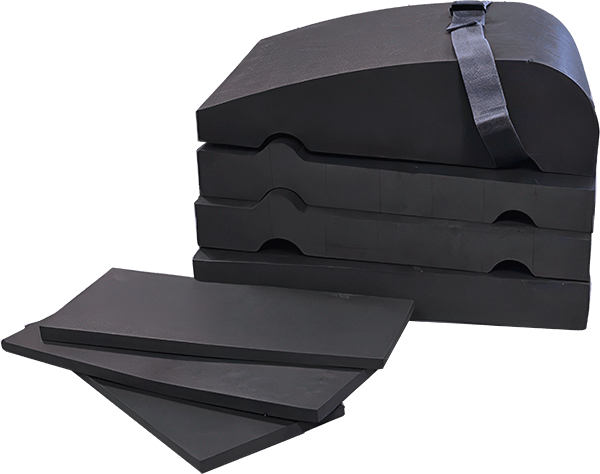
KyphoWedge — WEDG3000
A standalone MR-safe seven-pad system for supporting and elevating a patient's legs during MRI, CT, and other situations requiring leg support. It complements KyphoLift and is sold separately.
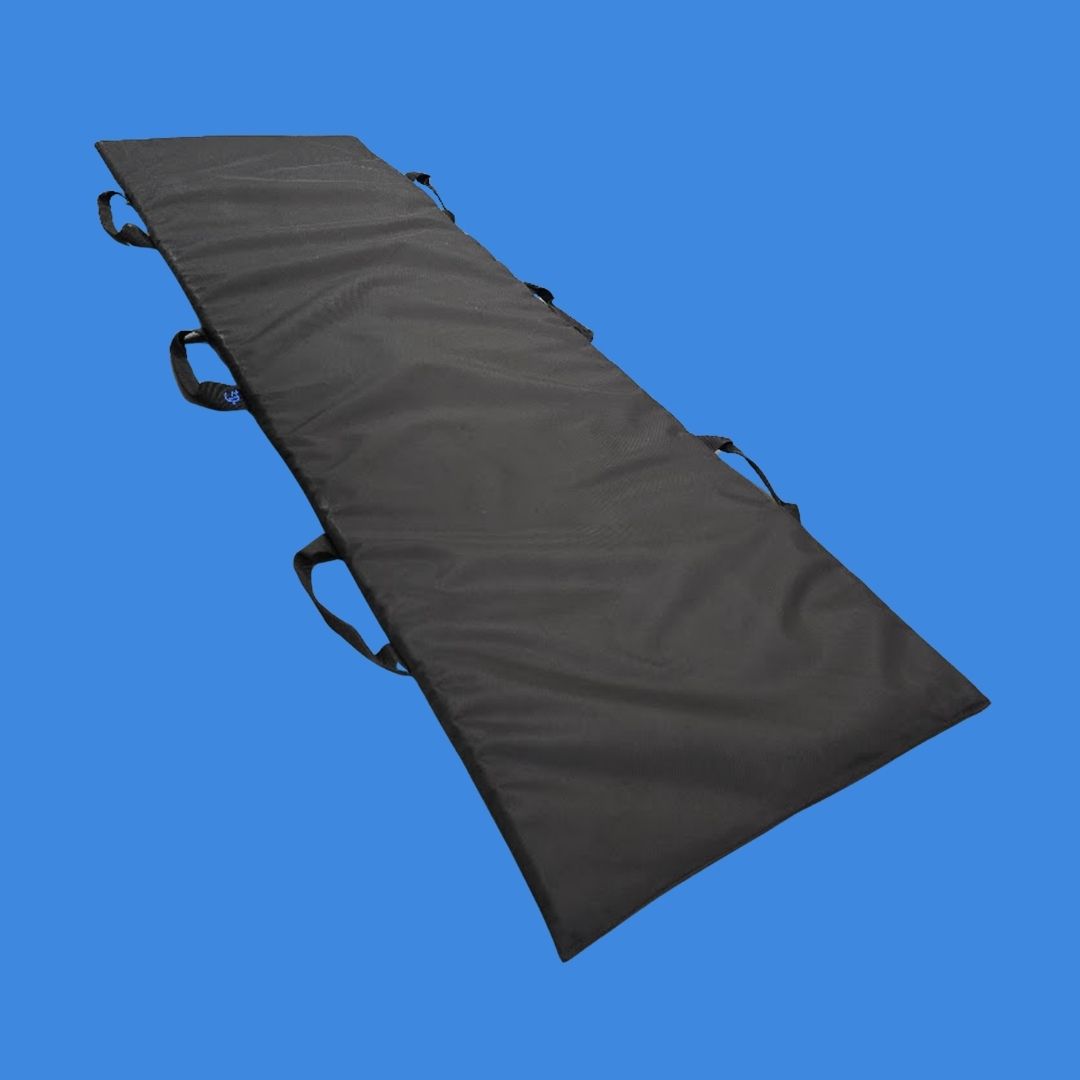
Gleiter Transfer Pad — GLE04000
A separate MR-safe manual patient-transfer device with built-in handles for moving patients between beds, gurneys, and similar hospital surfaces.