



Pro-MRI Distortion
MRI Geometric Distortion Phantom - Diagnomatic by Pro-Project - 09-401
Pro-MRI Distortion from Diagnomatic by Pro-Project uses a large liquid-fillable body and an internal reference grid to map MRI geometric distortion.
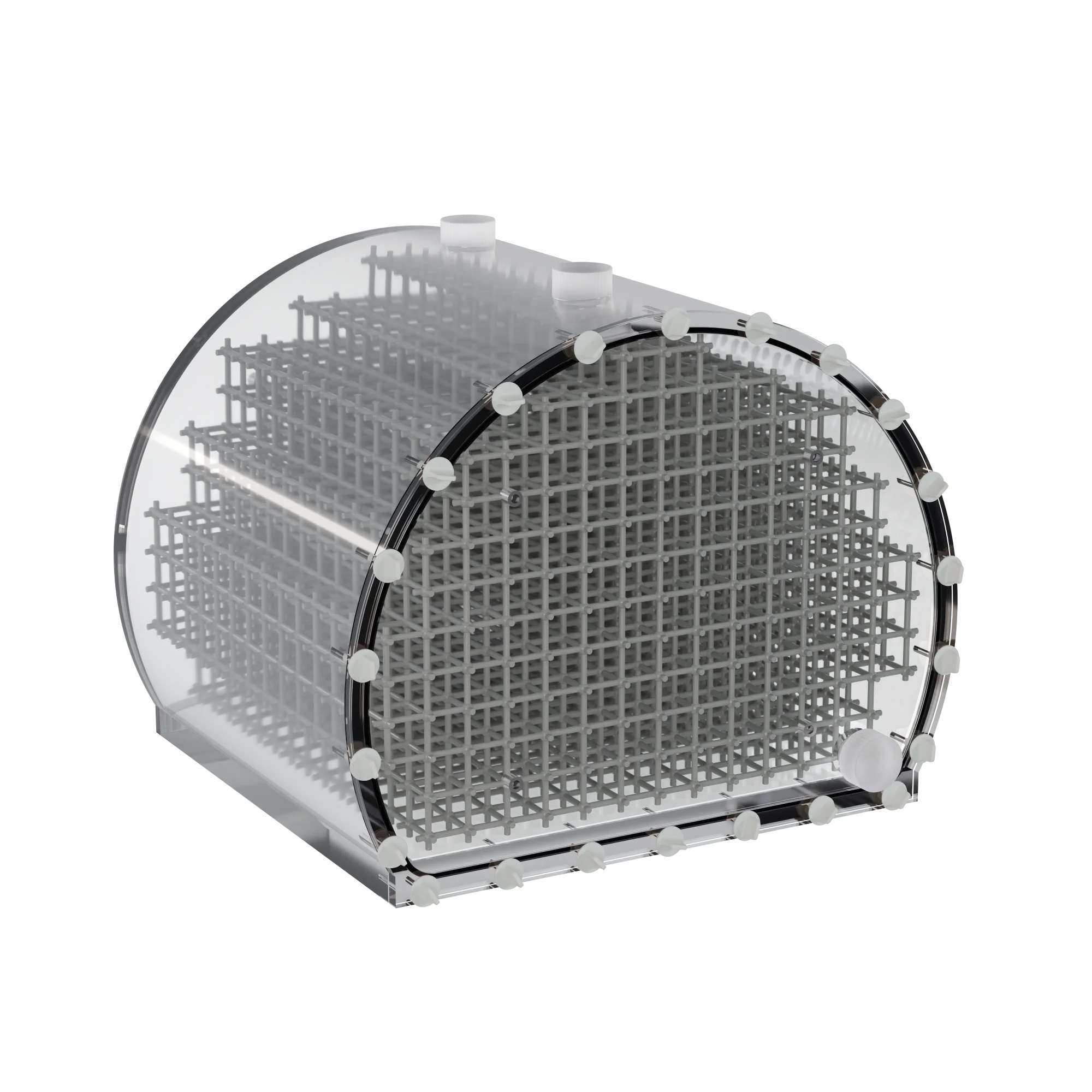
Click a photo or illustration to enlarge it.
Models and Ordering
| Part number | Model / configuration |
|---|---|
| 09-401 | Pro-MRI Distortion |
- Three-dimensional geometric distortion mapping
- Geometric accuracy as a function of distance from isocenter
- Gradient nonlinearity with vendor correction disabled or enabled, when the scanner permits
Specifications
(can be modified to customer specifications):
- Outside cylinder diameter: 350 mm (13.8 in)
- Overall outside height: 275 mm (10.8 in)
- Cylinder length: 300 mm (11.8 in)
- Nominal center-to-center spacing of the internal 3D grid reference points:
a) 20.3 mm in the inferior–superior (I–S) direction
b) 20.5 mm in the anterior–posterior (A–P) direction
c) 21.5 mm in the left–right (L–R) direction - Standard filling solution, when supplied: 10 mmol/L nickel chloride solution containing 75 mmol/L sodium chloride
Accessories
- carrying and securing belt
- filling funnel
- gravity-feed filling tube set with hand pump
- filling solution supplied separately in containers
- wheeled transport and storage case
- Diagnomatic software BASIC subscription
Features and Test References
- the phantom is designed to support geometric-distortion testing and reporting based on the principles of:
- NEMA Standards Publication MS 12-2016
- AAPM Task Group 284
- AAPM Report No. 100
- IEC 62464-1:2018 - CE marked
- Includes a manual covering the tests, result evaluation and recording.
Learn about Diagnomatic quality assurance software and its image analysis workflow.
Related Products
Request product information or a quote
Contact Supertech at (800) 654-1054 or send a quote request.
Contact Supertech at (800) 654-1054 or send a quote request.